
“Advanced Engineering Research (Rostov-on-Don)” is a peer-reviewed scientific and practical journal. It aims to inform the readers about the latest achievements and prospects in the field of Mechanics, Mechanical Engineering, Computer Science and Computer Technology. The journal is a forum for cooperation between Russian and foreign scientists, contributes to the convergence of the Russian and world scientific and information space.
Priority is given to publications in the field of theoretical and applied mechanics, mechanical engineering and machine science, friction and wear, as well as on methods of control and diagnostics in mechanical engineering, welding production issues. Along with the discussion of global trends in these areas, attention is paid to regional research, including issues of mathematical modeling, numerical methods and software packages, software and mathematical support of computer systems, information technology challenges.
All articles are published in Russian and English and undergo a peer-review procedure.
The journal is included in the List of peer-reviewed scientific editions, in which the main scientific results of dissertations for the degrees of Candidate and Doctor of Science are published (List of the Higher Attestation Commission under the Ministry of Science and Higher Education of the Russian Federation).
The journal covers the following fields of science:
- Theoretical Mechanics, Dynamics of Machines (Engineering Sciences)
- Deformable Solid Mechanics (Engineering Sciences, Physical and Mathematical Sciences)
- Mechanics of Liquid, Gas and Plasma (Engineering Sciences)
- Mathematical Simulation, Numerical Methods and Program Systems (Engineering Sciences)
- System Analysis, Information Management and Processing, Statistics (Engineering Sciences)
- Automation and Control of Technological Processes and Productions (Engineering Sciences)
- Software and Mathematical Support of Machines, Complexes and Computer Networks (Engineering Sciences)
- Computer Modeling and Design Automation (Engineering Sciences, Physical and Mathematical Sciences)
- Computer Science and Information Processes (Engineering Sciences)
- Machine Science (Engineering Sciences)
- Machine Friction and Wear (Engineering Sciences)
- Technology and Equipment of Mechanical and Physicotechnical Processing (Engineering Sciences)
- Engineering Technology (Engineering Sciences)
- Welding, Allied Processes and Technologies (Engineering Sciences)
- Methods and Devices for Monitoring and Diagnostics of Materials, Products, Substances and the Natural Environment (Engineering Sciences)
- Hydraulic Machines, Vacuum, Compressor Equipment, Hydraulic and Pneumatic Systems (Engineering Sciences)
The editorial policy of the journal is based on the traditional ethical principles of Russian scientific periodicals, supports the Code of ethics of scientific publications formulated by the Committee on Publication Ethics (Russia, Moscow), adheres to the ethical standards of editors and publishers, enshrined in the Code of Conduct and Best Practice Guidelines for Journal Editors, Code of Conduct for Journal Publishers, developed by the Committee on Publication Ethics (COPE).
The journal is addressed to those who develop strategic directions for the development of modern science — scientists, graduate students, engineering and technical workers, research staff of institutes, practical teachers.
About the journal
In September 2020, the scientific journal “Vestnik of Don State Technical University” (ISSN 1992-5980) changed its title.
The new title of the journal is “Advanced Engineering Research (Rostov-on-Don)” (eISSN 2687-1653).
The journal “Advanced Engineering Research (Rostov-on-Don)” is registered with the Federal Service for Supervision of Communications, Information Technology and Mass Media on August 7, 2020 (Extract from the register of registered mass media ЭЛ №ФС 77-78854 – electronic edition)
All articles of the journal have DOI index registered in the CrossRef system.
Founder and publisher: Federal State Budgetary Educational Institution of Higher Education "Don State Technical University", Rostov-on-Don, Russian Federation, https://donstu.ru/
ISSN (online) 2687-1653
Year of foundation: 1999.
Frequency: 4 issues per year (March 30, June 30, September 30, December 30).
Distribution: Russian Federation.
The journal "Advanced Engineering Research (Rostov-on-Don)" accepts for publication original articles, studies, review papers, that have not been previously published.
Website: https://www.vestnik-donstu.ru/
Editor-in-Chief: Alexey N. Beskopylny, Dr. Sci. (Engineering), Professor (Rostov-on-Don, Russia).
Languages: Russian, English
Key characteristics: indexing, peer-reviewing.
Licensing history:
The journal uses International Creative Commons Attribution 4.0 (CC BY) license.
Current issue
MECHANICS

The hydrodynamics of a submerged combustion vaporizer was studied. For the first time, eight turbulence models were compared within a single computational framework. Models that accurately reproduce velocity, temperature, and surface area were identified. Recommendations for selecting models for steady-state and transient conditions were provided. This approach improves the design accuracy of similar industrial installations. The results are applicable to brine heating and contaminated media purification.
Introduction. Improving the submerged combustion apparatus (SCA) requires a detailed understanding of its internal hydrodynamic behavior. There are studies on the numerical modeling of liquefied natural gas regasification units. However, these units, unlike vaporizers, do not provide high-velocity gas flow injection. Therefore, the methodology for numerical modeling of SCV (Submerged Combustion Vaporizer) used to heat concentrated brines and contaminated media has not been fully developed. The objective of this study is a comparative analysis of turbulence models for numerical simulation of aerodynamic flow paths and substantiation of recommendations for their selection. Three tasks are solved. The first is the creation of a set of numerical SCA models. The second involves numerical experiments with them. The third is the identification of their similarities and differences based on quantitative and qualitative experimental results.
Materials and Methods. The Eulerian–Eulerian approach was used to describe the motion of liquid and gas in the liquid–gas–solid particle system, while the Eulerian–Lagrangian approach was used for the solid phase. The equations of the turbulence models were sequentially incorporated into a general physicomathematical model of the system, which was closed by the empirical relations of Schiller–Naumann, Ishii–Zuber, and Rantz–Marshall. The problem was solved using the finite volume method in both steady-state and transient modes (with a time step of 0.1 s). Turbulence was simulated in homogeneous and heterogeneous settings. The computational environment was Ansys CFX. The grid cell size was 10 mm.
Results. For the eight turbulence models, the specific turbulent kinetic energy, velocity, liquid volume, and liquid temperature were calculated at the computational cell level. The maximum for the first indicator was 0.361 (k – ω), the minimum was 0.026 RNG (k – ε). For the second — 0.457 (DES) and 0.130 (k – ω), respectively. According to the third — 1.339 (k – ω); 1.186 (DES). According to the fourth — 58.7 RNG (k – ε); 28.2 (k – ω). The velocity fields were visualized for both modes. A low scatter of the deposited solid phase mass was observed (1.18–1.38 kg).
Discussion. The EARSM (Explicit Algebraic Reynolds Stresses Model) reproduces a flow structure similar to k – ε and SST (Shear Stresses Transfer), thereby confirming the reliability of their results. The k – ω model yields an unphysical result due to the lack of strict symmetry of the velocity field. The homogeneous DES (Detached Eddy Simulation) predicts maximum free-surface asymmetry. The resulting inclination angle (approximately 30°) does not correspond to the actual hydrodynamics in the SCA; therefore, the homogeneous DES is inapplicable. Three cases of greatest reliability have been established: homogeneous k – ω (flow symmetry, minimum average temperature); heterogeneous RNG k – ε (maximum average temperature); homogeneous DES (maximum surface deformation). SST is recommended for stationary modes, LES (Large Eddy Simulation) and heterogeneous SST — for dynamic processes.
Conclusion. In numerical simulations of the SCA, the calculations have proved to be conditionally stable. With a few exceptions, the turbulence models are generally equivalent. Recommendations are provided for using the models in steady-state and transient modes. In the future, the reasons for the extreme temperature and surface curvature results produced by the models will be studied in detail.

A methodology has been developed for the comparative assessment of support joints in trussless roof systems. Numerical modeling is combined with design of experiments. Four types of roof-to-beam connections are compared under identical loading conditions. A continuous steel frame reduces the joint stresses by more than half. Analytical predictions are validated through laboratory panel tests. The results are applicable to the design of long-span lightweight roofs.
Introduction. Trussless roofing systems employing curved cold-formed metal sheets are widely used in long-span industrial and public structures. Wind uplift and seismic excitation impose significant demands on the roof-to-beam base connection, where stress concentrations, local deformations, and bolt force imbalances govern structural performance and serviceability. Although local failure mechanisms at fasteners, clips, and seams have been extensively studied, no verified comparative framework exists for selecting base connection configurations specifically for trussless arched roof systems. The objective of this study is to evaluate the structural behavior of four field-constructible base connection systems — traditional mechanical anchor, cap plate, support bracket, and continuous steel frame — under identical loading conditions and to establish a mechanics-based basis for connection selection.
Materials and Methods. AZ150 Galvalume steel panels (0.8 mm, 600 mm width, 20 m arch span) with explicit trapezoidal corrugation geometry were tested experimentally under simulated wind uplift (0.50–2.00 kN/m2) and modelled numerically using ANSYS Mechanical with SHELL181 shell elements, surface-to-surface contact, Coulomb friction, and multipoint constraint bolt formulations. Wind pressure (1.0–2.0 kN/m2) and seismic acceleration (0.10–0.25 g) were studied as factors in a two-factor response surface methodology design using Design-Expert v13. Model predictions were validated against laboratory deflection and base stress measurements, and cross-validated against independently published experimental data.
Results. Mid-span deflection decreased from the traditional anchor to the continuous frame, with a maximum reduction of 20%. The peak von Mises stress at the base connection was reduced by 60.1%, and per-bolt demand in the continuous frame was halved relative to the traditional anchor. ANOVA confirmed that wind pressure was the sole statistically significant factor (p < 0.0001), while seismic acceleration had no detectable effect on vertical deflection or base stress intensity (p = 1.0000). FEA predictions agreed with experimental measurements within 6.8% for deflection and 7.2% for base stress.
Discussion. The findings demonstrate that connection stiffness and contact continuity, rather than sheet material strength, govern the stress-strain state of trussless roof systems under service-level wind loading. The improvement across the four configurations is attributable to increased effective contact area and the transition from discrete bolt-dependent to distributed surface-based load transfer.
Conclusion. A validated finite-element and response-surface-based framework has been developed for comparative assessment of trussless roof base connections. The continuous steel frame is recommended as the preferred connection for long-span trussless roofing, subject to further validation under field conditions and across extended seismicity ranges.
A neural network technology for assessing damage to concrete structures has been developed. The method determines the depth and porosity of the layer using elastic wave data. The network is trained on numerical simulation data of wave processes. High prediction accuracy has been achieved over the entire porosity range. The approach is stable even at low porosity, where previous methods did not work. The results are applicable in systems for remote monitoring of structures.
Introduction. Destruction of the surface layer of concrete structures caused by an aggressive environment is one of the most common types of damage that require remote and automatic monitoring. Acoustic non-destructive testing methods can address this problem. However, the existing approaches, including the contour line intersection method we previously developed, demonstrate instability in the low-porosity region (less than 15%) because of the weak dependence of signal amplitude on time. So, we identified a problem that existing methods cannot reliably identify damage parameters across the whole range of values. The objective of this work is to develop a neural network technology for the robust identification of the depth and porosity of the damaged layer of an extended structure based on the analysis of non-stationary waves, which determines the uniqueness and scientific novelty of the study.
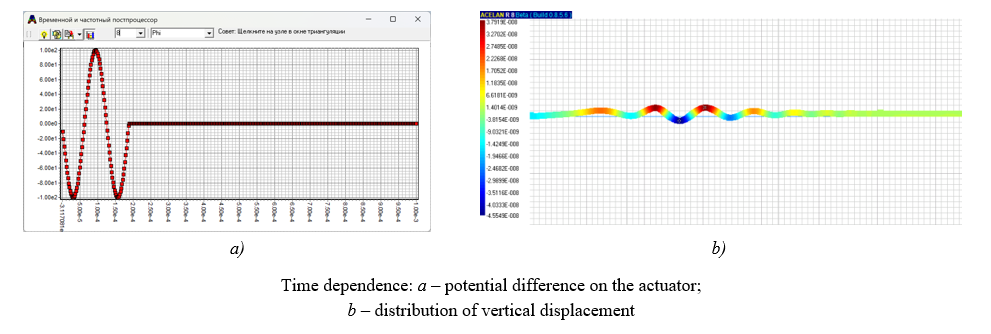
Materials and Methods. The study is based on numerical simulation. The mechanical model is a two-layer elastic anisotropic strip of thickness H = 1 cm with an upper damaged layer modeled as a porous composite whose effective properties calculated in the ACELAN-COMPOS package. The damage parameters are layer thickness h (0.05–0.3 cm) and porosity p (10–80%). A piezoelectric actuator and sensor made of PZT-4 ceramics with vertical polarization are placed on the surface of the strip. Non-stationary waves are excited by a potential difference on the actuator and recorded by the sensor. To obtain training data, a series of direct problems for 48 parameter combinations were solved using the finite element method in the ACELAN package with quadratic triangular elements (mesh: 5,616 elements; 12,155 nodes). Based on cubic interpolation, training (10,000 points) and test (40,000 points) datasets were generated. A feedforward neural network, a multilayer perceptron with four hidden layers (128-64-32-16 neurons), ReLU activation function, dropout layers (20%), and Adam optimizer was constructed and a weighted loss function was used to reduce positive asymmetry in predictions.
Results. On the independent test set, the trained network achieves a mean absolute error of 2.433% for porosity and 0.121 mm for depth (R² = 0.977 and 0.910, respectively). In the low-porosity region (p < 15%), the error is 0.405% for porosity and 0.173 mm for depth with a bias of only +0.188%, confirming the reliability of the approach in the region. All 40,000 test points yield unique two-dimensional signatures, empirically confirming the uniqueness of the inverse problem solution.
Discussion. The obtained data confirm that the proposed neural network technology overcomes the fundamental limitation of the contour line intersection method, providing stable predictions across the entire porosity range. The use of a weighted loss function effectively reduces systematic overestimation of porosity predictions. A limitation of the approach is the assumption of constant porosity along the depth and length of the layer. Accounting for inhomogeneities would require solving an inverse problem of significantly higher complexity. In future work, we plan to move beyond just two extracted features and instead use the full time-domain signal, possibly with convolutional architectures.
Conclusion. The neural network technology developed in this research provides an effective method of identification of damage parameters across the entire range of values, overcoming the limitations of existing methods. The obtained results confirm the applicability of the proposed approach for acoustic monitoring systems of extended concrete structures.
MACHINE BUILDING AND MACHINE SCIENCE

An integrated approach to machine assessment is proposed. It combines defect indicators for all components. Three artificial neural networks are created. The networks differ in the number of input features. They define three machine state classes. Testing has confirmed the correct state determination. Reliability increases with the number of features. The method is applicable for machine safety assessment.
Introduction. Federal industrial safety standards and regulations establish the requirements for the technical condition assessment of the said engineering devices and associated equipment. However, these regulatory frameworks require a discrete-level defect analysis of composite nodes and parts of load-lifting machinery. This approach does not always ensure the required accuracy and objectivity in monitoring the overall condition of equipment, as various combinations of defects in numerous structural components determine varying degrees of their overall wear. This is due to the fact that, during long-term operation, the components and parts of the mechanisms are subject to uneven destructive stress resulting in variability in the degree of their damage. The present work proposes a combination of scientific and technical measures to improve the operational reliability of both lifting machines and associated equipment through the integration of modern intelligent algorithms. The research objective of the study is to develop an intelligent decision support system designed for a comprehensive, integrated assessment of the operating conditions of lifting structures.
Materials and Methods. To achieve this objective, three models of artificial neural networks have been developed. The first model contains five layers: the first input layer includes eight neurons corresponding to the same number of rejection indicators of lifting structure components, such as defects in the undercarriage, braking system, rope-and-pulley system, and load hook. The three subsequent hidden layers contain eight neurons each. They are responsible for the learning process of the network and provide recording of intermediate results. The output layer consists of three neurons, each of which characterizes a certain class of technical condition of the object under study. The second neural network has a similar configuration, except for the input layer, which additionally includes nine neurons corresponding to the rejection indicators of the supporting metal structures of lifting facilities. The input layer of the third model contains twenty-nine neurons. This structure allows for a comprehensive assessment of equipment condition across a full range of rejection indicators. The practical implementation of the developed models was performed in the Python programming environment using the Scikit-learn machine learning library. Testing of the performance and efficiency of the developed networks was carried out on ten independent samples according to their performance criteria and confidence intervals for assessing the state of engineering devices.
Results. The performance of the developed models under testing was 100%, meaning each of the three neural network structures accurately classified the conditions of the lifting structures in all ten test scenarios. Moreover, the confidence level of the judgments made increased as the number of network input parameters was scaled in the range from 0.628 to 0.705.
Discussion. The presented data demonstrate the significant impact of the artificial neural network architecture on the precision of lifting structure diagnostics. The key result is the establishment of a numerical relationship between combinations of rejection criteria and the resulting condition class through the analysis of the activation levels of output layer neurons, which serve as a quantitative measure of the reliability of the decision made by the model. The findings correlate with previous research in the field of applying machine learning methods to technical diagnostics. The specificity of the proposed approach is in the integrated assessment of the overall condition without detailed mathematical modeling of local physical processes, which determines its efficiency under conditions of limited a priori information about operational modes. Limitations of the work include a relatively small sample size and a certain subjectivity of expert marking. Possible errors are due to the risk of retraining the neural network on small arrays of training information.
Conclusion. The proposed intelligent system is developed taking into account practical experience in operating lifting machines, analysis of accumulated statistical data, and the requirements of current industry standards. Scientific results expand the understanding of the potential of using artificial intelligence algorithms to ensure the technological safety of complex technical objects. The implementation of such systems will allow engineering and technical personnel who do not have extensive practical experience in on-site inspection of structures to make qualified and informed decisions regarding the possibility of continuing the safe operation of equipment.
INFORMATION TECHNOLOGY, COMPUTER SCIENCE AND MANAGEMENT

Texture-based and contour-based features are compared for facial emotion recognition. Evaluation is performed using a unified, reproducible cross-validation protocol. Contour features have successfully discriminated seven emotions on an open face dataset. This performance is shown to be due to the similarity between the training and test sets. For the first time, errors of the texture‑based approach are interpreted through facial muscle function. The results are applicable to medical systems and driver state monitoring applications.
Introduction. The recognition of basic emotions from facial images is increasingly required in driver monitoring systems, medical user interfaces, and educational learning analytics. As of July 2024, such systems have been mandated by EU regulations. Among the methodological approaches in this area, neural-network architectures reach high accuracy but require large training samples and remain opaque, which is critical in safety applications. Classical descriptors LBP and HOG, in contrast, are computationally efficient and interpretable. However, their performance under comparable conditions remains underexplored: there are still questions regarding the stability of their metrics under cross-validation on compact datasets, as well as the nature of confusions between visually similar emotions. In this context, it was assumed that the near-perfect accuracy of HOG observed in such protocols reflected leakage of subject identities between the training and test sets, thereby overestimating the generalization ability of the descriptor. The objective of the study was to evaluate LBP and HOG on the JAFFE dataset in a single, reproducible pipeline, and determine the limits of their applicability.
Materials and Methods. To address the stated tasks, the study was organized as a comparative empirical evaluation of two classical descriptors within a single reproducible protocol. The open JAFFE dataset (Lyons et al., 1998; 213 grayscale images of ten subjects with seven basic emotions) served as the experimental basis, with quality assessed under stratified five-fold cross-validation. The images underwent intensity normalization (histogram equalization) and geometric alignment by facial landmarks. Then, on the prepared frames, the LBP (texture) and HOG (contour geometry) descriptors were extracted, with specific parameters reported in the body of the article. The resulting features were fed to a linear SVM (support vector machine), with the regularization parameter tuned using a grid search over {0.01, 0.1, 1, 10} via internal three-fold cross-validation. Quality was assessed as the mean ± standard deviation of Accuracy and Macro-F1 metrics across five outer folds. The software implementation of the entire pipeline was done in Python 3.10 (using the scikit-learn 1.3 and scikit-image 0.21 libraries).
Results. In the experiment, HOG combined with linear SVM provided complete separation of the seven emotional classes on the JAFFE dataset within the selected stratified protocol. Under the same algorithmic order, LBP showed significantly lower accuracy and revealed a specific structure of systematic confusion errors: the pairs “fear — surprise” and “sadness — neutral” provided consistently indistinguishable, while the category-wise distribution of metrics quantified the fundamental differences between contour and texture feature representations.
Discussion. The results obtained indicate the decisive impact of the data splitting protocol on the final assessment of classical descriptors. Specifically, the perfect separability of HOG features is explained by preservation of subject identities across training and test sets, and is fully consistent with the known sensitivity of the gradient profile to individual facial features. With respect to LBP, the observed values fall within the range known from the reference work by Shan, Gong, and McOwan. However, the pattern of false positives documented in the present study is the first to be interpreted in detail through FACS description of overlapping sets of active facial muscles, which has previously been absent from published comparative reviews.
Conclusion. The work has successfully solved the problems of comparative evaluation of LBP and HOG methods, construction of a fully reproducible software pipeline, and meaningful interpretation of automatic classification errors. Based on the data obtained, the HOG model combined with a linear SVM is suitable for laboratory tasks with a fixed set of subjects, whereas LBP in the same combination is justified as a component of hybrid architectures with convolutional or recurrent networks. In applied terms, the results can be used in the design of emotion recognition systems for medical interfaces and driver-monitoring systems. At the same time, the limitations of the work include the compact JAFFE dataset and the laboratory imaging conditions. Addressing these limitations, future work will involve moving to a more demanding protocol with full subject-out exclusion from the training set, as well as a comparative evaluation against current deep learning models.

An integrated indicator of supply conformance with production needs is proposed. A modified output rhythmicity index is developed. It takes into account the impact of excess volumes on the enterprise's operational rhythm. The methods are based on a new normalized Jaccard index for assessing similarity. The concept of descriptive immiscible sets is introduced for such assessments. The results are applicable to the analysis of logistics and digital transformation.
Introduction. Sustainable performance of an industrial enterprise implies that the structure of incoming resources corresponds to production requirements, along with the rhythm of output throughout the different phases of production activity. Quantitative assessment of these parameters should be based on relevant indicators. Unfortunately, the currently used set of metrics is incomplete and has certain methodological problems. Specifically, there is no indicator of the degree to which the resources received correspond to the needs of the enterprise, and the rhythmicity index used to assess the planned production does not take into account all the factors affecting the deviation of actual output from planned values. The objective of this study is to develop a set of indicators that would determine the conformance of actual supplies with the current needs of the enterprise, and would also more fully characterize the rhythm of the production process.
Materials and Methods. The study used a non-systematic review of sources to identify problems inherent in currently used approaches to assessing the production and logistics activities of an industrial enterprise. To synthesize indicators of conformance of purchased resources with production needs and determine the rhythm of production, set theory methods were used. From a theoretical perspective, the work is based on methods for constructing measures of similarity of sets, as well as on the theory of production organization.
Results. This paper proposes an integral indicator for assessing the degree to which actual material resource deliveries meet enterprise needs (in terms of product range and quantity). The paper also defines a modified rhythmicity index of production, which is used to verify the alignment of actual output with planned targets, while also accounting for the impact of above-plan volumes on the rhythm of the enterprise operations. The research demonstrates that the methodology for calculating the modified rhythmicity index is free from the shortcomings inherent in existing approaches.
Discussion. The indicators obtained in the course of the study are universal. They can be used not only to assess the quality of an enterprise procurement logistics, but also to analyze the consistency of various stages of the production process, as well as to evaluate the industrial enterprise cooperation with external customers. It has been shown that the implementation of digital technologies is of great importance for improving the relevant characteristics of the production and logistics activities of the enterprise. Moreover, the data obtained can be used to justify the feasibility of digital transformation of the enterprise. The proposed methods for assessing the conformance of actual supplies with enterprise needs and calculating the modified production rhythmicity index are based on a new approach to calculating the Jaccard index. This new version of the Jaccard index can be called the normalized Jaccard index. It should be used to assess the similarity of descriptive sets for which qualitative differences between elements (specifically, those of different dimensions) are of importance. These sets can be described as descriptive immiscible sets.
Conclusion. The indicators introduced in the present paper make it possible to improve the quality of assessment of the production and logistics activities of an industrial enterprise, as they make it possible to determine the extent to which the composition of acquired resources meets production needs and more fully account for the impact of various factors on the rhythm of production. Recommendations for using the proposed indicators to assess the quality of production and logistics activities of industrial enterprises are provided.

Three control functions of an adaptive treadmill platform were compared. Quality was assessed using an integral criterion of nine indicators. For virtual reality, the linear function turned out to be the best. For computer vision, a nonlinear function was preferred. The control latency was safe and less than one hundred milliseconds. The results are useful for setting up platforms when restoring gait.
Introduction. Restoring independent walking requires rehabilitation aids that enable intensive training while preserving the natural variability of movement. Most researchers typically examine no more than three process-related indicators, all within a single measurement loop. These parameters include, for example, the accuracy of speed and position assessment, gait parameters, ground reaction force, and the user's subjective assessment. This approach hinders direct comparison and sound selection of control functions. Parametric optimization of linear, nonlinear, and PID functions using an integral criterion, which takes into account stability, duration, and amplitude of transient processes, tracking microdynamics, and subjective comfort, has been little studied. This research fills the gap. The objective of the study is an experimental comparison and parametric optimization of linear, nonlinear and PID control functions of an adaptive treadmill platform using virtual reality (VR) and computer vision (CV).
Materials and Methods. The experimental setup integrated a treadmill platform and two tracking systems: VR and CV. The processes were evaluated using an integrated quality criterion with nine parameters (position stability metrics, acceleration dynamics, tracking microdynamics, and subjective assessment). The robustness of the integrated criterion to expert weight assignment was determined by sensitivity. In each of the 1000 iterations, the weight coefficients were varied within ±20% of the initial values and re-normalized to maintain a sum equal to one. Five healthy male subjects were used to select the function parameters, and 10 male subjects were used for the final function comparison. A total of 495 valid records were obtained from 165 experiments.
Results. The conditions for obtaining the minimum values of the integral criterion were determined:
– for CV – a nonlinear function with a criterion of 2.683;
– for VR – a linear function with a criterion of 2.002.
When using a linear function, the transition from CV to VR was accompanied by a 30.3% decrease in the criterion, from 2.874 to 2.002. The preferred control function was determined by the characteristics of the user position tracking system. The application of VR trackers yielded statistically significant differences between the linear and nonlinear functions (p < 0.001), as well as between the linear and PID functions (p = 0.0020). The difference between the nonlinear and PID functions was below the level of statistical significance (p = 0.0574). For CV, no statistically significant differences were found in the combined profiles (p = 0.1407–0.5664).
Discussion. For the VR‑based loop, a linear function with a 1‑meter working area is recommended as the baseline. For the CV‑based loop, a nonlinear function with a working area of 0.75 m and a nonlinearity coefficient of 0.3 is recommended. However, the superiority of one of these options has not been proven due to the close value of the PID function and a partial change in ranks when varying the weights. The functions demonstrate stability and physiologically safe latency (less than 100 ms). Due to study limitations (small sample size and only healthy volunteers), the research results are considered part of the preliminary engineering validation and tuning of adaptive treadmill platforms.
Conclusion. Recommendations are provided for selecting control functions and tracking systems for adaptive treadmill platforms used in musculoskeletal rehabilitation. The proposed parameters are to be validated on a larger sample, including patients with gait disorders. Future work will also address the development of individualized control tuning based on data acquired during the initial minutes of walking on the platform.

A method for calculating swaying of buildings on multilayer soils is proposed. The method couples finite and boundary elements in a single design scheme. The frequency responses of the base under surface dynamic load are obtained. The dispersion of the layered medium and the loss of wave energy into depth are taken into account. Parallel calculations have significantly reduced the running time of the program. The results are applicable when designing foundations of complex structures.
Introduction. The dynamic analysis of the behavior of buildings and structures featuring complex foundations on multilayered soils, as well as the analysis of multilayered coverings containing local inclusions and inhomogeneities, are subjects of great interest to the scientific community. These topics necessitate the further development of dynamic analysis methods and the creation of efficient algorithms for calculating wave fields in such media. This study aims to analyze the stress-strain state of a complex structure resting on a multilayer soil foundation using FEM-BEM coupling, and to comparatively assess the efficiency of various parallel computing technologies to optimize the calculation of these characteristics.
Materials and Methods. The technique of transition from the description of steady-state oscillations of an isotropic linear elastic medium in the form of the Lamé equation to the fundamental solutions of the boundary element method (BEM) by means of integral Fourier transforms is considered. The form of the fundamental solution matrices is based on the superposition of solutions to three auxiliary problems. The problem under consideration is reduced to the combined solution of a discretized BEM SLAE and the FEM equation of motion. The numerical analysis of a structure with a partially embedded foundation on a multilayer soil base is examined using a developed software solution and the Ansys Mechanical software suite.
Results. Amplitude-frequency characteristics were obtained for a specific point within a multilayer 3D foundation subjected to dynamic surface loading. Several problem formulations were considered — accounting for the presence or absence of a structure, as well as varying stiffness configurations of the foundation layers. Additionally, data were obtained regarding the displacement of points at the layer interfaces within the section beneath the structure. The computation time of the stress vector for the BEM fundamental solutions was measured. The impact of Coarray, MPI, and OpenMP parallelization techniques, implemented in Fortran, on the software module wall-clock and CPU execution time was analyzed.
Discussion. The results obtained confirm theoretical concepts regarding the interaction between the structure, including its foundation, and the surrounding soil mass. Given that solving the problem in question is a resource-intensive and time-consuming process, the use of parallel computing technologies to optimize calculations represents a natural step in the software evolution. An analysis of real-time and processor-time costs for the program, utilizing up to eight parallel threads, made it possible to assess the potential for further scaling this task.
Conclusion. The results lead to the conclusion that the matrix-based technique for constructing fundamental solutions for multilayer media with surface and embedded objects is an effective tool. It allows the dispersion properties of the multilayer medium and the radiation conditions at infinity arising from object-foundation interaction to be accurately captured, while also naturally enabling parallelization of the computational processes when the BEM and FEM are coupled. The use of Coarray, MPI, and OpenMP technologies for parallel computing significantly reduces the software module execution time without incurring a substantial increase in resource consumption.

A criterion has been developed for selecting the control resolution of LED supplementary lighting. It connects the discreteness of light flux with the photosynthesis variability. A two-stage model of control error transformation is proposed. The greatest sensitivity of tomato was detected under moderate lighting. Twelve-bit control reduced variation to two percent. The results are applicable when designing lighting for modern greenhouses.
Introduction. Controlled-environment agriculture (CEA) is emerging as a key platform for Agriculture 4.0, where sensors, cyber-physical systems, and artificial intelligence enable precise control over light regimes and resources. In modern greenhouses, programmable supplementary lighting using radio-controlled LED creates adaptive light scenarios, yet simultaneously renders the light system sensitive to digital control effects. Quantization error in the digital setting of the pulse-width modulation (PWM) duty cycle serves as an example of this. Photobiological studies typically focus on plant responses to photosynthetic photon flux density (PPFD), spectral composition, and pulsed light regimes, whereas analyses of LED drivers treat PWM bit depth primarily in terms of dimming accuracy, energy efficiency, and electromagnetic compatibility. Consequently, it remains unclear at which combinations of PPFD and PWM bit depth the discreteness of digital control might lead to biologically significant instability in the photosynthetic response. The objective of this study is to develop a computational criterion for evaluating the permissible bit depth of PWM control for LED supplementary lighting, limiting the relative variation in the net photosynthetic rate of plants.
Materials and Methods. The authors reviewed publications on PWM-based control of LED supplementary lighting and pulsed plant lighting using targeted queries. Based on current concepts in controlled environment lighting, PPFD — the amount of useful light incident on the leaf surface per unit time — was adopted as the primary metric of the light environment. Photosynthetic activity was simulated using an empirical relationship between the net photosynthesis rate and PPFD. To assess the impact of quantization noise in the PWM control channel of the LED supplementary light system, a two-stage mathematical model has been developed. It describes how quantization parameters are converted into PPFD fluctuations, and how these, in turn, affect variations in the photosynthetic response. It also introduces a criterion for the acceptable level of photosynthesis instability along with computed requirements for bit depth, modulation frequency, and light flux pulsation depth.
Results. It has been shown that the sensitivity of the net photosynthetic rate of tomato plants to PPFD fluctuations is maximal in the intermediate range of 200–600 µmol·m⁻² s⁻¹, corresponding to the steep section of the light-response curve, and decreases sharply in the light-saturation region at PPFD levels above ~1500 µmol·m⁻² s⁻¹. Numerical modeling indicates that 8-bit PWM control results in a relative variation in photosynthesis of a few percent within this range, whereas using 12- to 16-bit resolution reduces the temporal instability of the photosynthetic response to levels below 1–3%.The derived relationships made it possible to formulate engineering recommendations regarding the minimum permissible PWM bit depth and frequency for various PPFD operating ranges — providing the absence of biologically significant instability in photosynthesis — and to link the parameters of the digital LED supplementary light control system with requirements for crop yield stability in greenhouses.
Discussion. The obtained light curves and their approximation using hyperbolic models confirm the classic pattern of photosynthetic light saturation: a nearly linear increase at low PPFD and a plateau at high light levels, consistent with general approaches to assessing productivity based on integrated resources. Using the derivative of the light curve as a measure of photosynthetic sensitivity to PPFD fluctuations have revealed that, within the moderate PPFD range, high-frequency pulsations caused by quantization noise can induce additional variability in the photosynthetic response of a few percent. Simulation has shown that transitioning from 8-bit to 12–16-bit PWM at kilohertz frequencies reduces this instability to levels comparable to natural microclimate fluctuations and spatial light non-uniformity, thereby transforming digital light control into a significant photobiological factor. The proposed criterion for permissible photosynthetic instability complements existing PPFD recommendations with formalized constraints on light pulsation and can be used in the design of digital control systems for LED supplementary lighting within the frameworks of Agriculture 4.0 and CEA.
Conclusion. A calculation criterion has been developed for selecting the bit depth of PWM control for LED supplementary lighting. This criterion links the granularity of the PPFD setpoint to the permissible relative variation in the net photosynthetic rate of plants. Calculations based on a model light-response curve for tomato plants revealed the highest sensitivity to quantization error within the PPFD range of 200–600 µmol·m⁻² s⁻¹, whereas the impact of this error diminishes under light saturation conditions. For the selected set of parameters, a PWM resolution of 12 bits or higher ensured a calculated variation in of no more than 1–2%. The results are applicable to steady-state conditions and require experimental validation using cultures with different light-response curves, as well as extension to dynamic supplementary light regimes.

A nonlinear model of human capital reproduction has been developed. It accounts for training, artificial intelligence, and skill obsolescence. The model incorporates worker mobility and wage differentials. Scenario analysis has identified the conditions under which competencies grow or are lost. Training and new technologies can mitigate workforce-related risks. The model is applicable to workforce planning and decision evaluation.
Introduction. An economic-mathematical model of human capital development is an essential tool for managing a human capital of the enterprise. Existing models do not take into account the complex dynamics of such factors as training intensity, competence depreciation, introduction of new technologies, and worker mobility. Consequently, there arises a need for an economic-mathematical model of labor resource reproduction that provides a comprehensive picture of their current state and future parameters. The objective of the study is to develop a dynamic economic-mathematical model of the reproduction of human capital of enterprises, taking into account the key factors of its transformation, and to empirically validate it using data from Russian enterprises.
Materials and Methods. Based on a theoretical analysis of the factors affecting the reproduction of enterprise human capital, these factors have been formalized to construct a dynamic economic-mathematical model. Logistic models are employed to describe the dynamics of human capital development, wherein the rate of growth is determined simultaneously by the internal management decisions of the enterprise, structural losses due to competence obsolescence, and the external competitive environment. Given the difficulty of obtaining corporate data to validate the developed model, the authors utilized survey results from engineers at three machine-building enterprises (n = 617). Following the processing of the survey data, estimates were derived for the coefficients α and β, which characterize the intensity of artificial intelligence (AI) adoption and implementation.
Results. To model competitive dynamics for a group of enterprises within an industry, a system of interconnected ordinary differential equations (ODE) has been formulated. It is shown that calibrating the presented dynamic model at the enterprise level requires data that include HR metrics, such as the intensity of training and artificial intelligence adoption, as well as mobility and attractiveness parameters linked to remuneration and workforce flows. A numerical experiment based on the proposed dynamic economic-mathematical model was conducted to generate a five-year forecast of human capital dynamics for three machine-building enterprises (N = 3). Three scenarios reflecting labor resource dynamics are presented: 1) without inter-firm interaction; 2) accounting for the impact of wage differentiation; and 3) accounting for varying levels of activity in corporate compensation policies. The results confirmed the presence of a saturation effect for Scenario 1, the pronounced impact of labor market competition on human capital dynamics for Scenario 2, and the significance of training intensity and AI technology usage — factors that can even partially offset the adverse effects of the competitive environment in Scenario 3.
Discussion. The proposed model of human capital reproduction is based on a system of ODE, providing a holistic and internally consistent description of how this resource evolves within an enterprise under the influence of investments in employee training, adoption of AI technologies, and changes in the competitive environment. The results of model testing across three scenarios for three enterprises align with the findings of other studies. In particular, the saturation effect at the enterprise level in the medium term is confirmed, as well as the positive impact of wage growth, increased employee training, and adoption of AI on the development of human capital (specifically, for organizations with a low initial level of it).
Conclusion. The authors propose an approach to modeling enterprise human capital reproduction amid the rise of AI technologies. The approach is based on the premise that employee competencies are formed and lost over time under the combined influence of training, technological renewal, and inter-firm mobility. This economic-mathematical model describes human capital dynamics as a nonlinear process of bounded growth relative to a fixed industry frontier, which provides comparability of enterprise parameters. A numerical experiment involving three enterprises has demonstrated the model practical interpretability and the importance of jointly accounting for the above factors.

An ensemble model for early prediction of spike type disturbances has been developed. It takes into account the time structure of the process and class imbalance. Gaps are restored using multiple data filling method. The best balance of quality is given by the gradient tree enhancement model. It predicts disruptions one to three days before they are registered. The model is applicable for decision support in aluminum production.
Introduction. Maintaining high technical and economic performance in aluminum production is a pressing operational challenge. The use of artificial intelligence makes it possible to mitigate the impact of process irregularities such as the deformation of the anode bottom resulting in spike formation. The causes and consequences of spike formation have been thoroughly studied. Dozens of parameters signaling this disturbance are identified. However, existing solutions typically detect deviations only after they have occurred or predict related states. Industrial realities demand adequate, advance warning of the problem. The objective of this study is to develop and validate an intelligent model for the early prediction of spike type disturbances under aluminum production.
Materials and Methods. The study has analyzed over 70 process parameters based on average daily monitoring data from eight electrolyzers at a pilot site (2020–2025). The positive class was defined based on the pre-failure interval spanning 72 to 24 hours prior to the recorded disturbance. Ensemble methods were used for prediction:
– gradient boosting (XGBoost, CatBoost, LightGBM);
– FEDOT automated pipeline;
– neural network ensembles (RTDL-RM, RTDL-NE, TabM).
Quality metrics: Accuracy, Precision, Recall, F1.
Results. The LightGBM model was identified as optimal, with the following metrics: Accuracy — 0.88; Recall — 0.79; F1 — 0.79. For events without disturbances, it correctly classified the “normal” state in 95% of cases (900 observations), while incorrectly identifying “disturbance” in 5% of cases (46 observations). For events involving disturbances, 62.5% of states were correctly identified (10 observations), whereas disturbances were missed in 37.5% of cases (6 observations). Validation using data from an actual technological process showed the model ability to detect spikes 24–72 hours prior to their actual registration. During the validation, six spike formation events were recorded, and the model detected signs of the developing disturbance in five of them (83.3%).
Discussion. The research results are consistent with the physical and technological characteristics of spike formation. The proposed solution complements existing methods for the local monitoring of anodes and electrolyzers through analyzing parameters derived from daily monitoring data. Validation confirms known challenges for predictive models in industrial electrolysis: difficulty in event detection, class imbalance, and changing process characteristics. The monitoring data from eight electrolyzers at the pilot site are insufficient. Further testing is required to confirm the model generalizability — over longer periods and at other sites.
Conclusion. The ability of the model to predict a disturbance 24–72 hours prior to the detection of a spike formation was confirmed, as was its sufficient effectiveness given the constraints imposed by sample size and the variability of process conditions. Future research will involve data augmentation, model validation at other production sites, and a comprehensive analysis of average daily and instantaneous monitoring parameters to localize the disturbance.